
I’m currently designing wardrobes for three different rooms—and I know exactly what I want. Rather than trying to explain my vision with sketches or reference photos, I created 3D models of each piece. Why? Because when it comes to custom furniture, clarity is everything.
In Europe, where built-in wardrobes are more common than walk-in closets, every centimeter matters. 3D renderings helped me fine-tune dimensions and interior layouts, and now I can share these visuals directly with furniture makers to get accurate quotes.
Here’s how each wardrobe came together:
1. My Wardrobe – Balanced and Functional
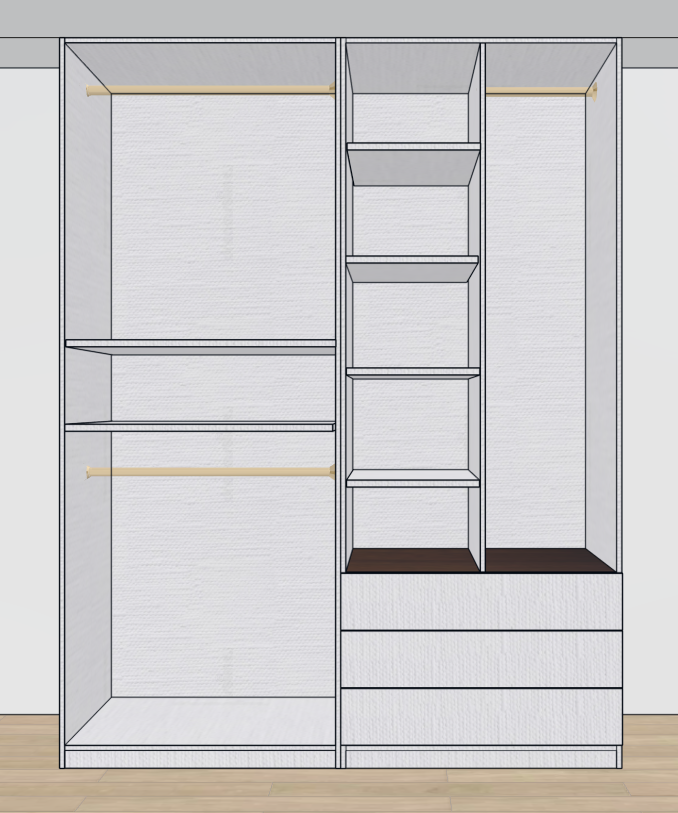
For my own wardrobe, I wanted a well-organized layout that feels tailored to my daily routine. I included:
-
Three drawers for small items and accessories
-
Several cubbies for folded clothes
-
Three hanging sections: two for shirts and pants, and one tall section for long dresses
Designing it in 3D helped me arrange each element efficiently and make full use of the vertical space.
2. My Husband’s Wardrobe – Simple and Multi-Purpose
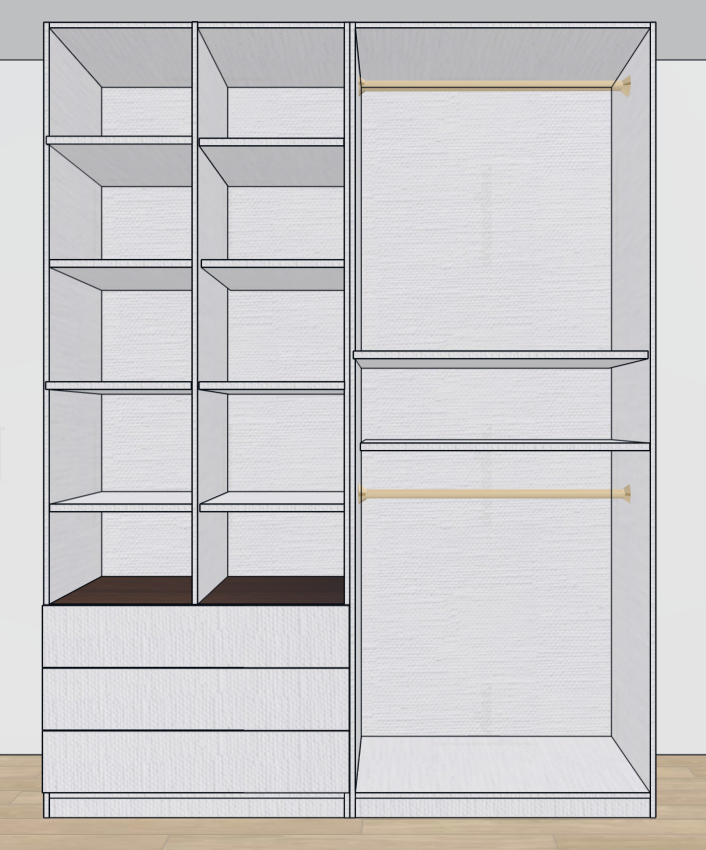
My husband’s wardrobe is the same size as mine, but with a slightly different setup:
-
Drawers for everyday essentials
-
Extra cubbies, which will also store his office items and equipment
-
Two hanging sections for shirts and pants—no need for long hanging space
The 3D model helped us combine practicality with personal needs, all in one clean layout.
3. Guest Room Wardrobe – Spacious and Versatile
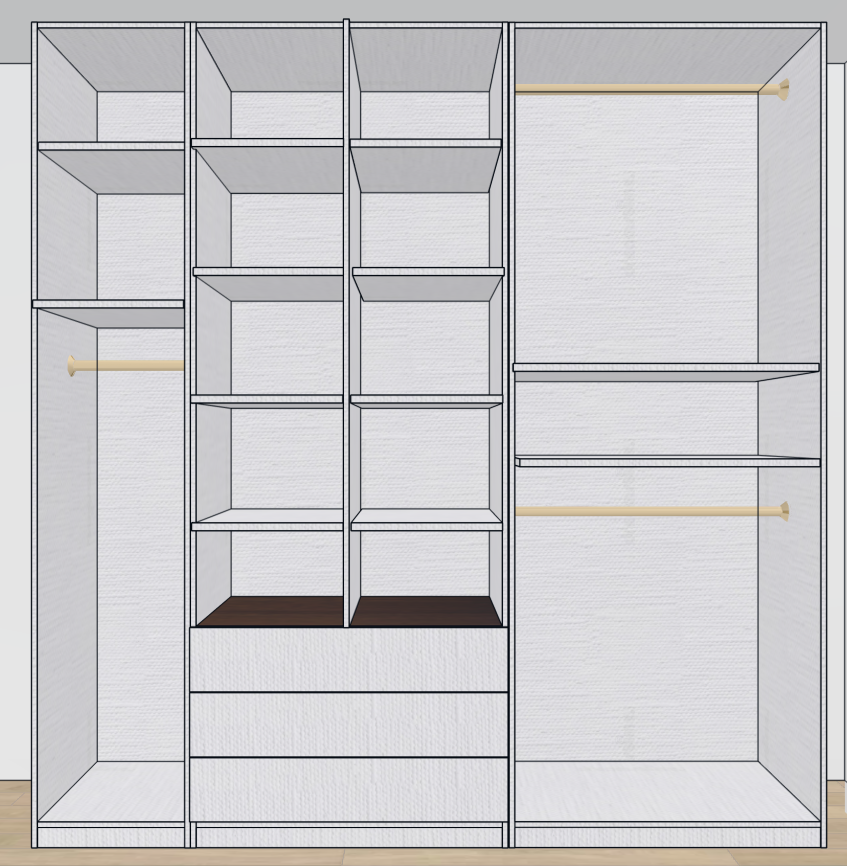
The guest room gave me more flexibility, so I went a bit larger here. This wardrobe includes:
-
A tall hanging section for long dresses or coats
-
Plenty of cubbies and drawers, mirroring my husband’s layout
-
A bit more width to make the most of the available wall space
Using 3D made it easy to find the right proportions without overcrowding the room.
Still Undecided on the Doors? That’s Okay.
At this stage, I haven’t yet chosen the finishes or the look of the wardrobe doors—and that’s totally fine. The point of this process is to figure out the layout first. By designing everything in 3D, I now know exactly what I need in terms of structure, dimensions, and functionality.
This makes it much easier to approach furniture stores: I can show them the interior layout and immediately see which ones can offer something close—or better yet, customize it for me. That way, I can focus only on the stores that can actually deliver, saving time and narrowing down the final design decisions like finishes and hardware.
If you’re customizing wardrobes—especially in Europe where smart use of space is key—3D design is a fantastic first step. It brings clarity, saves time, and makes collaboration with furniture professionals a whole lot easier.