
I just got back from the Builders’ Show in Las Vegas, where I had the chance to experience something unexpected—a sensory room. Designed as a calming retreat amid the hustle and bustle of the event, this space featured plush, cozy chairs paired with stump-like wooden tables, each equipped with dimmable lamps and white noise speakers for a soothing atmosphere.
To deepen relaxation, they provided light-blocking masks and earplugs, allowing guests to fully disconnect. Interactive sensory tools, like relaxation balls and acupressure rings, encouraged tactile engagement, creating a multi-sensory experience that blended touch, sound, and visual comfort for stress relief and focus.
This concept intrigued me and got me thinking about the growing importance of sensory-friendly environments in both personal and professional settings.
What Is a Sensory Room?
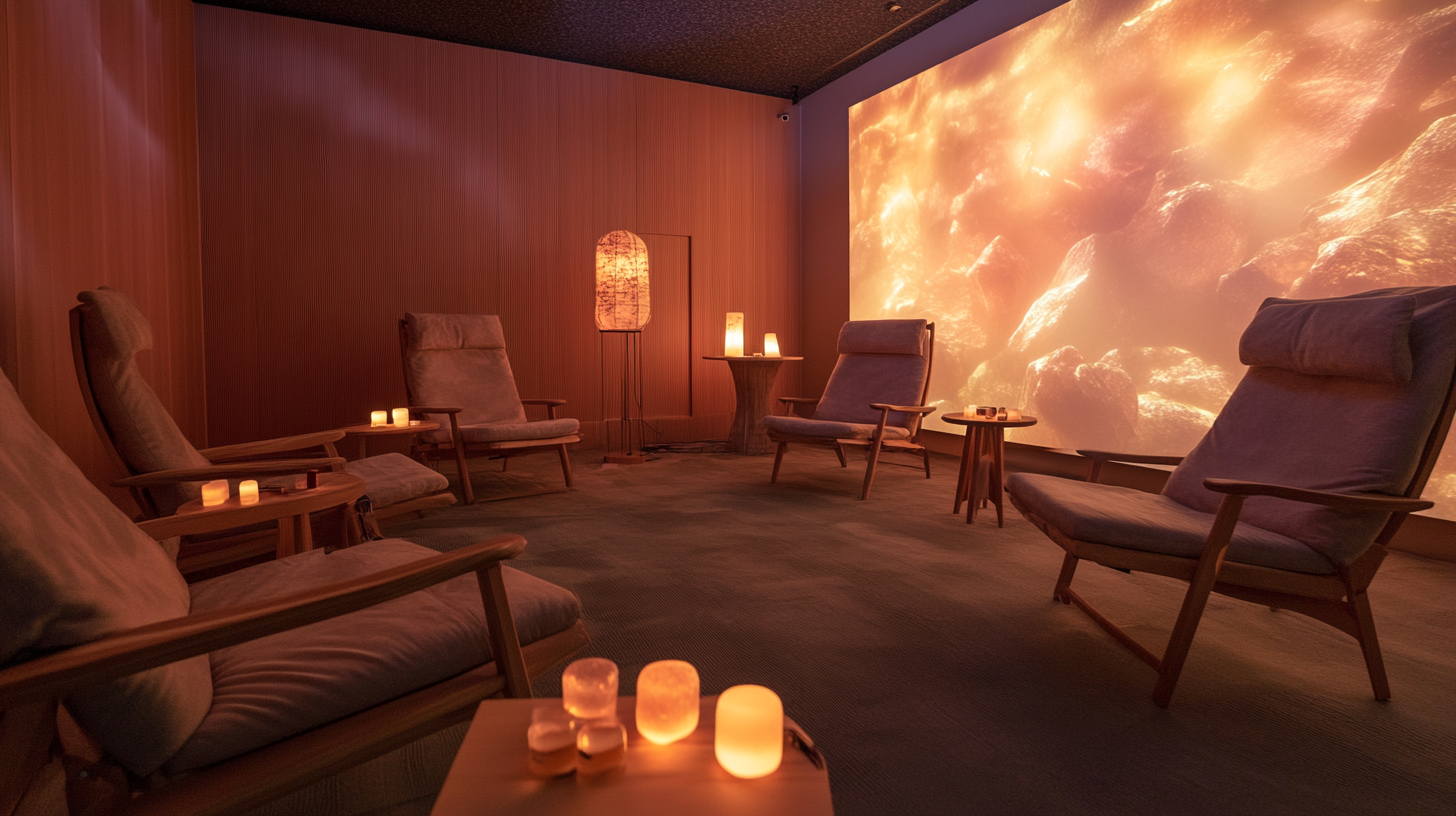
AI-generated sensory room
A sensory room (also called a multi-sensory environment or MSE) is a designed space that provides carefully curated sensory input through:
- Visual stimulation: LED light panels, bubble tubes, fiber optic strands, and projectors
- Auditory elements: Calming music, nature sounds, or sound-absorbing materials for quiet
- Tactile experiences: Textured surfaces, weighted blankets, and sensory toys
- Proprioceptive tools: Swings, compression furniture, and massage rollers
- Aromatherapy: Gentle scents that promote relaxation and focus
Originally developed for individuals with developmental disabilities, these therapeutic spaces now serve diverse populations seeking sensory regulation and mindfulness.
Why Sensory Rooms Are Trending Now

AI-generated sensory room
The increased understanding of sensory processing disorders and sensory integration has expanded beyond clinical settings. More people recognize how sensory input affects behavior, attention span, and emotional regulation for everyone.
In today’s high-stimulation digital environment, sensory rooms offer a deliberate counterbalance—a space to disconnect, decompress, and reset an overloaded nervous system. This sensory sanctuary provides much-needed relief from constant screen time and information overload.
Research consistently shows sensory rooms can:
- Reduce anxiety and stress levels
- Decrease challenging behaviors
- Improve focus and concentration
- Enhance mood and emotional regulation
- Support better sleep patterns
Who Benefits from Sensory Rooms?

AI-generated sensory room
While initially designed for autism therapy, sensory rooms now serve:
Students who need sensory breaks to improve learning outcomes. Schools incorporate sensory spaces where students can self-regulate, resulting in improved classroom behavior and academic performance.
Adults with anxiety, PTSD, or chronic stress. Healthcare facilities use sensory rooms to reduce patient anxiety before medical procedures and provide therapeutic interventions.
Anyone seeking mindfulness and relief from sensory overload. Airports and public spaces are adding sensory-friendly areas to accommodate travelers with sensory sensitivities, making travel more accessible.
Workplace Wellness Revolution

AI-generated sensory room
Forward-thinking companies now include sensory rooms in their employee wellness programs, supporting neurodiversity while helping all staff manage stress and maintain productivity. These calming spaces promote mental health and prevent burnout in high-pressure work environments.
Major corporations have embraced sensory-friendly initiatives with impressive results.
Microsoft has installed sensory rooms across multiple campuses as part of their neurodiversity hiring program.
Google’s “decompression spaces” feature interactive light walls, sound dampening technology, and relaxation pods.
JPMorgan Chase incorporated sensory zones in their Columbus headquarters, while Salesforce offers “mindfulness zones” with sensory elements in their Salesforce Tower.
Even airports are joining the trend, with American Airlines partnering with autism advocacy groups to install sensory rooms in major hubs like Chicago O’Hare and Miami International Airport.
How to Create a Simple Sensory Space at Home
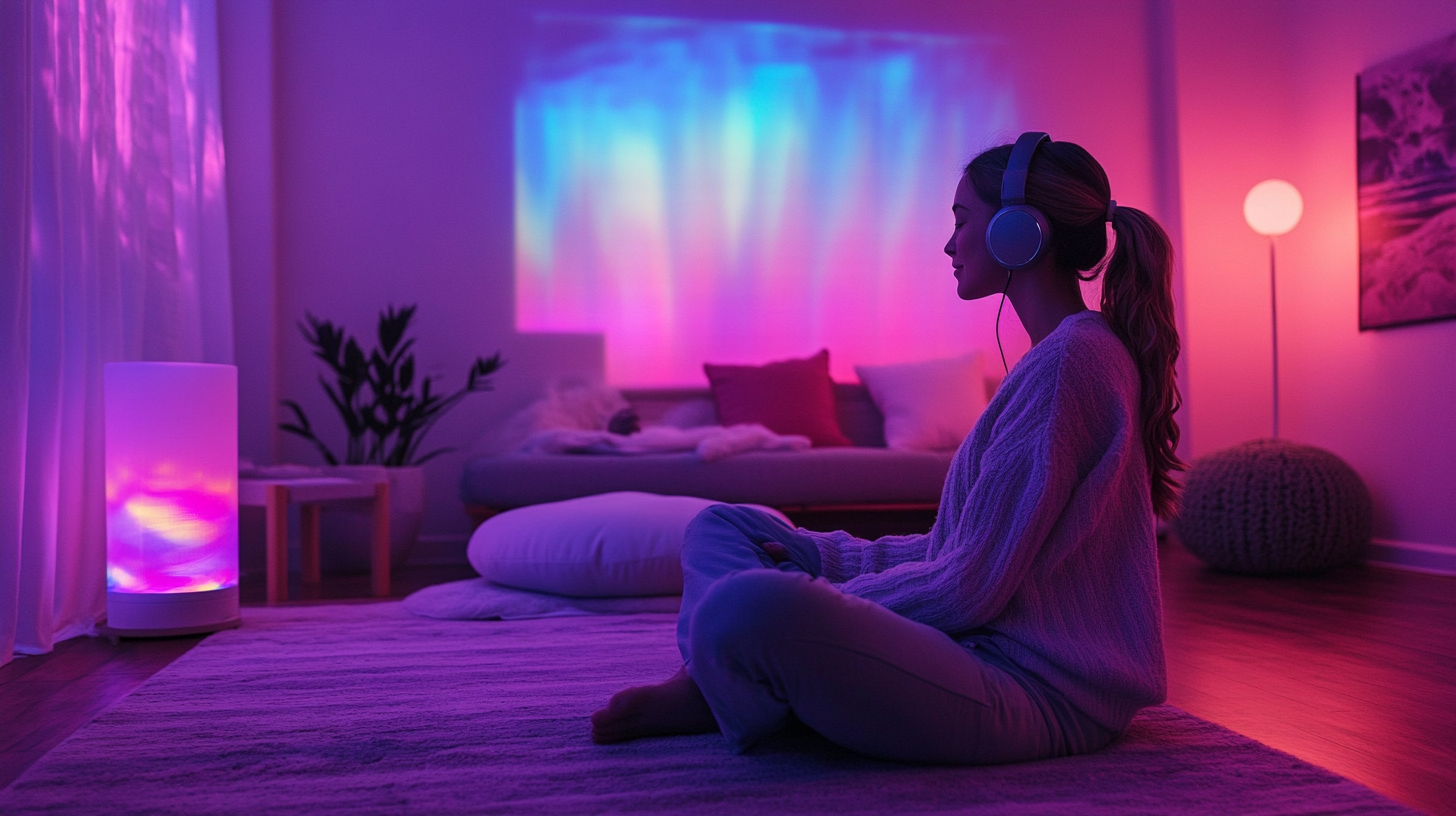
AI-generated sensory room
Home sensory spaces are becoming popular as families create dedicated areas to support sensory needs and overall wellness.
You don’t need a large budget to incorporate sensory room elements:
- A quiet corner with comfortable seating and soft lighting
- Noise-canceling headphones or a white noise machine
- A small collection of fidget tools and textured objects
- Weighted blankets or lap pads
- A portable light projector or lava lamp
The most effective sensory spaces reflect their users’ specific preferences and sensory needs.
Conclusion
The rising popularity of sensory rooms represents a significant shift in our approach to environmental design and wellness. By acknowledging the importance of sensory input on our well-being, these spaces offer an accessible solution for managing the sensory challenges of modern life.
Sensory rooms provide a customizable haven where people can reconnect with themselves and regulate their nervous systems—a valuable resource in today’s fast-paced, high-sensory environment.
Would you use a sensory room if it were available in your workplace or a public setting? Let me know in the comments!