Visualizing a 218-Room Coastal Development in Portugal
Most of my past work has focused on single-family residential homes—one structure, one client decision chain, and a relatively contained set of variables. This project was different.
This time, the scope was a full hospitality complex: a new all-inclusive seaside eco-resort in Porto Santo (Madeira archipelago), opening April 25, 2026, with 218 rooms and direct beach access.
For a development of this size, 3D renders become the fastest way to communicate the vision at scale—internally, externally, and across teams that don’t speak the same technical language.
Why big resort projects need 3D visualization
1) Complexity multiplies—and so do misunderstandings
On a residential project, a single render can answer most questions. On a resort, there are many guest touchpoints to align: arrival experience, circulation, amenities, views, day/night atmosphere, and how everything connects.
This eco-resort includes key guest-facing elements like restaurants, bars, and an outdoor pool, plus access to adjacent resort facilities—exactly the kind of multi-zone experience that benefits from photoreal visualization.
2) Marketing starts before construction finishes
Large hospitality developments often need to generate demand early. When opening dates are public and bookings are promoted, the visuals matter even more. In this case, the resort is already being marketed as opening April 25 and positioned as all-inclusive—a perfect example of why developers use renders to support pre-opening storytelling and sales readiness.
3) Early clarity reduces late-stage costs
The earlier stakeholders can “see it,” the earlier teams can catch misalignment—before it becomes redesign, rework, or change orders. For resorts, that often means:
guestroom layout expectations vs. real-world feel
pool + bar adjacencies and sightlines
restaurant ambience and capacity perception
wayfinding and flow between buildings/amenities
What I delivered (visual set)
To show the true scale of this resort project, I’m including pairs of images that connect technical intent to guest experience—one architectural plan and one photoreal 3D render for each key area.
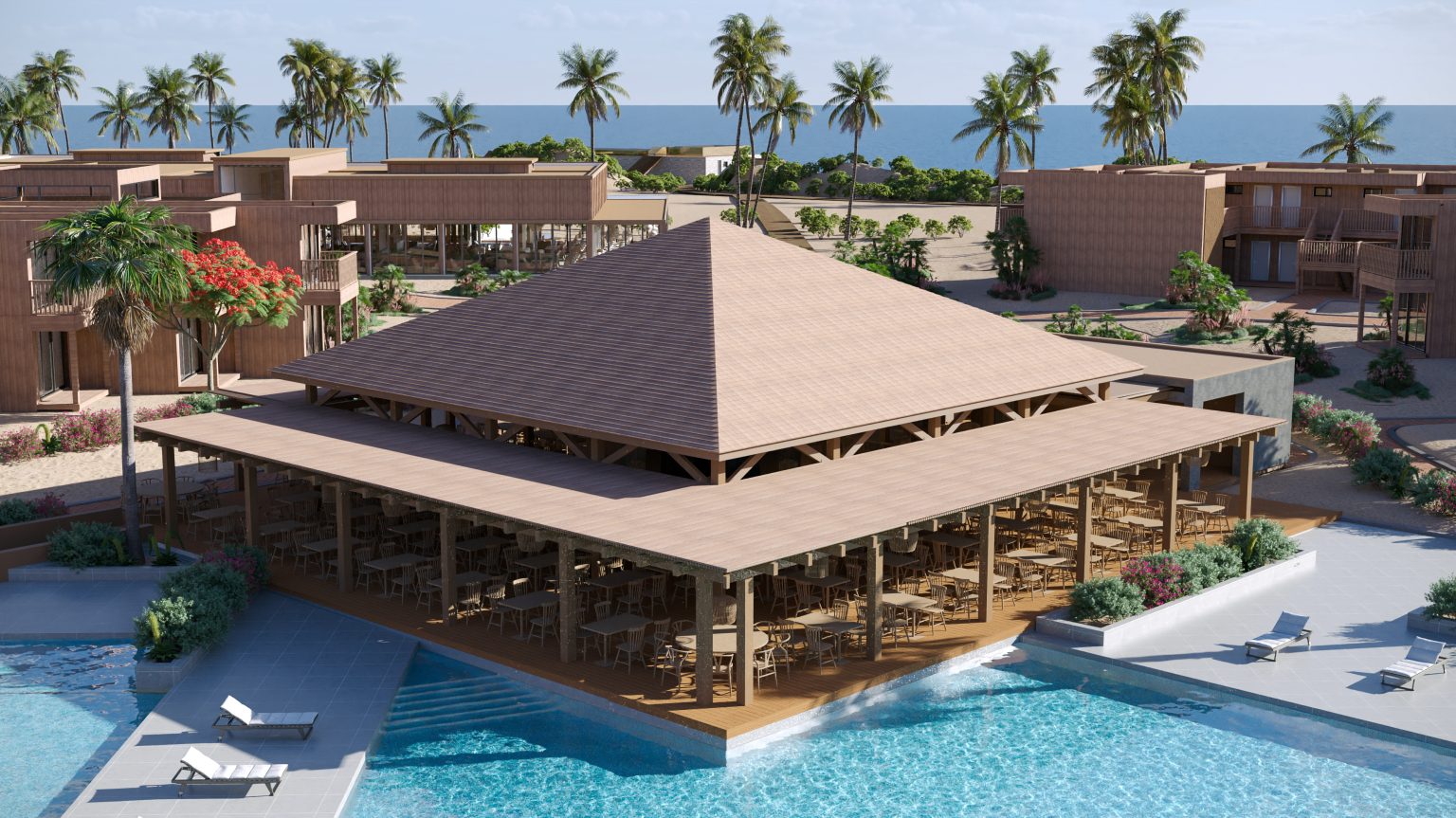
Restaurant Plan: illustrates the dining layout and seating strategy, plus circulation around the tables. 3D render: brings the experience to life—warm ceiling details, pendant lighting, seating rhythm, and the overall airy, high-capacity atmosphere.
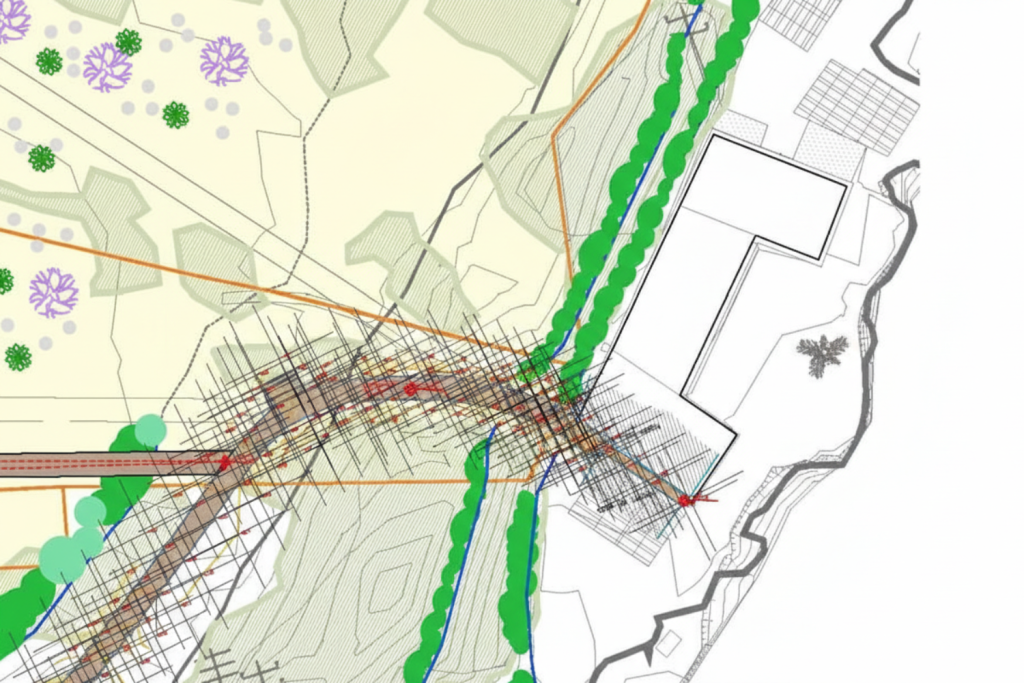
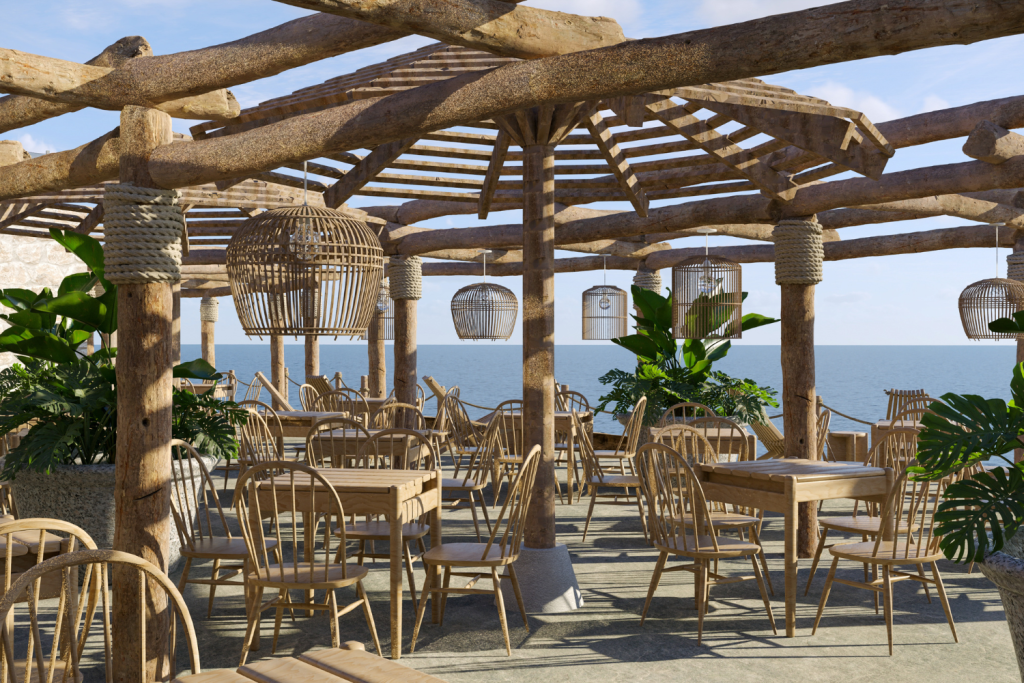
Oceanfront Bar Plan: shows the bar terrace’s placement within the overall resort context and how guests approach it from the circulation network. 3D render: captures the sense of place and a “signature moment”—a pergola-covered terrace, natural textures, and uninterrupted ocean-facing views.
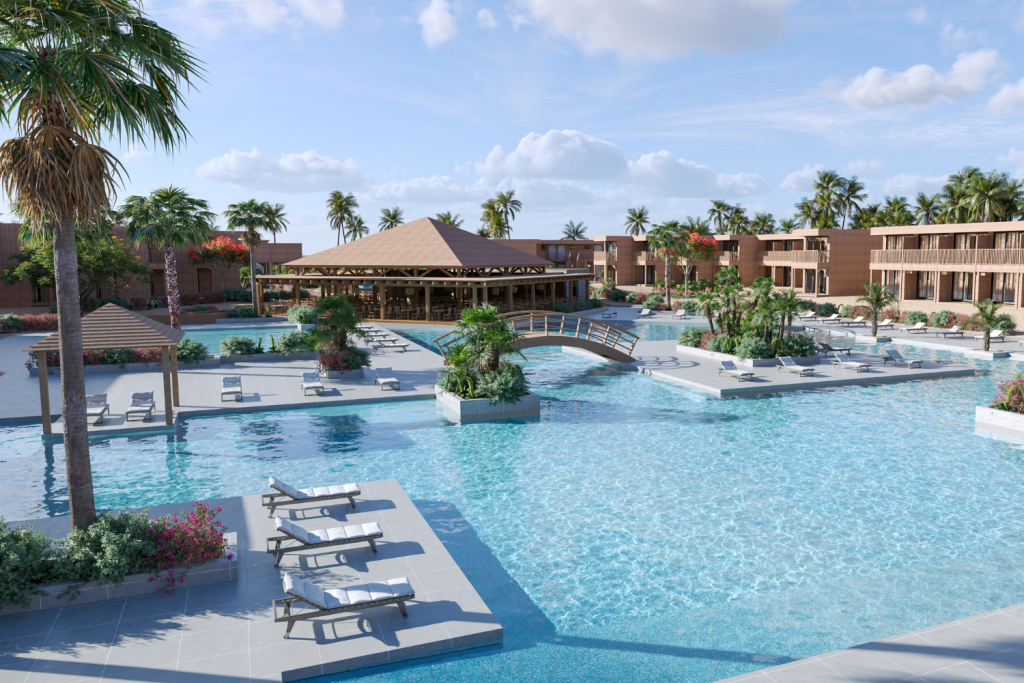
Pool Area Plan: clarifies how the pool zone sits within the wider complex and how pathways connect key buildings and amenity areas. 3D render: communicates scale and resort energy—expansive water surface, bridge feature, lounge zones, and the way the pool integrates with the architecture and landscaping.
Bedroom Plan: defines the room typology and layout, including bathroom placement, furniture arrangement, and balcony/veranda access. 3D render: sets expectations for comfort—clean finishes, warm wood tones, soft lighting, and the indoor-outdoor feel through the large sliding doors to the balcony.
Moving from residential to resorts is a shift from “one hero image” to a complete visual system. The goal isn’t just realism—it’s decision support across a wider set of stakeholders, timelines, and commercial needs.
Curious what a “visual system” could look like for your development? Happy to chat.