
It’s a common worry among interior designers that Artificial Intelligence (AI) might overshadow their creativity or even replace their roles. However, AI can be a powerful ally because it offers new ways to enhance creativity, streamline processes, and deliver innovative solutions in interior design. Let’s explore how embracing AI can transform challenges into opportunities and revolutionize the way interior designers work.
Transform Client Requirements into Visual Inspirations
When a client shares their vision for a space, it can sometimes be a list of must-haves rather than a clear design direction. AI can be incredibly useful here by transforming these requirements into a tangible image. For example, if a client wants to redesign their bathroom with modern fixtures, natural light, and a relaxing ambiance, AI can generate a preliminary image incorporating these elements. This image serves as a starting point, sparking further discussion and refinement with the client to ensure the final design truly fits their vision.
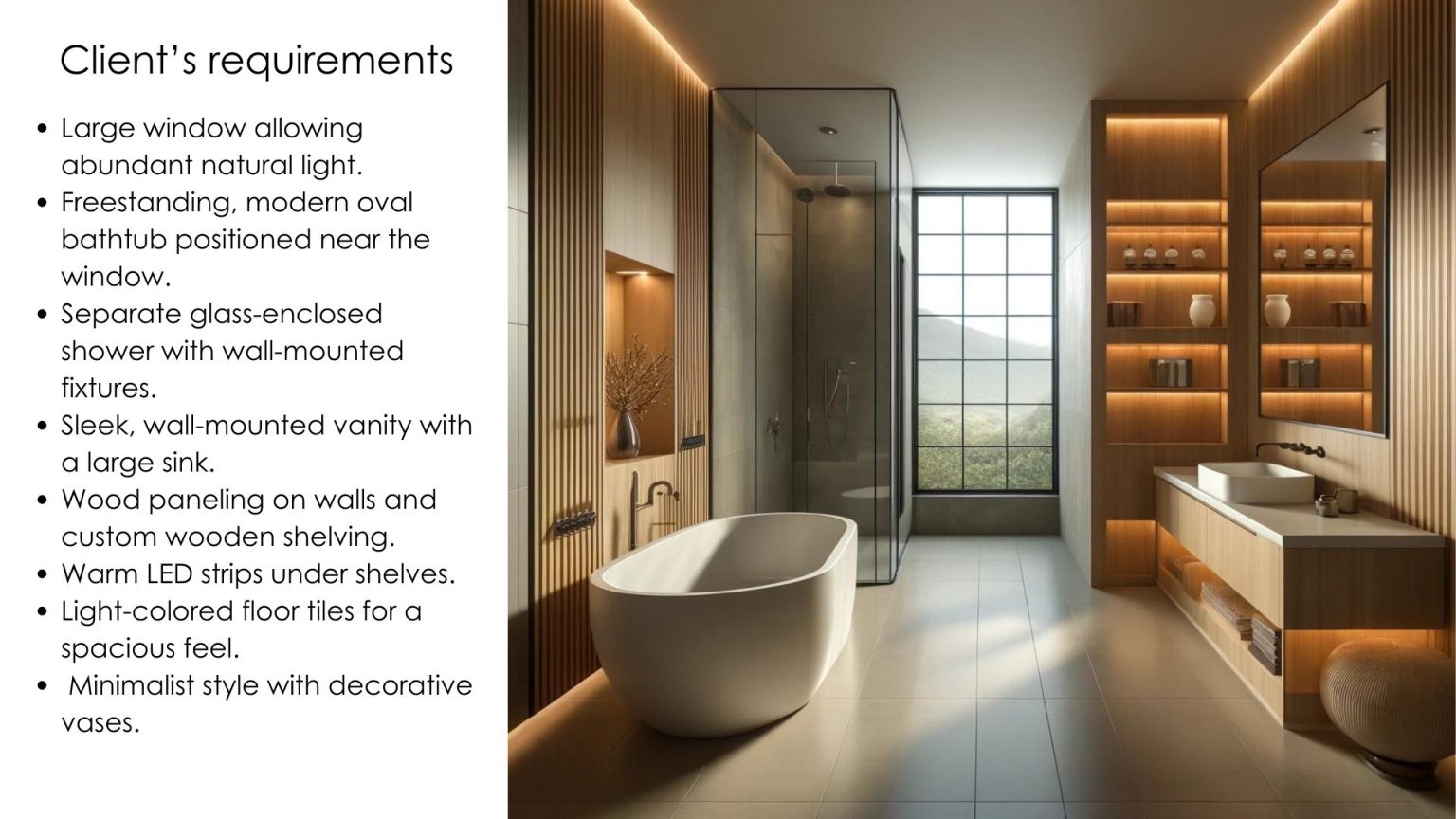
This image was generated based on a description provided to an AI model by ChatGPT.
Prompt: Generate a photorealistic image of a bathroom with these requirements. Large window allowing abundant natural light; freestanding, modern oval bathtub positioned near the window; separate glass-enclosed shower with wall-mounted fixtures; sleek, wall-mounted vanity with a large sink; wood paneling on walls and custom wooden shelving; warm LED strips under shelves; light-colored floor tiles for a spacious feel, and minimalist style with decorative vases.
Try Out Ideas Fast
AI lets designers play around with different styles and setups without spending a lot of time or money. If a designer wants to see what a bathroom would look like with a white marble floor instead of a brown tile one, AI can make that change in a snap. This makes it super easy to try lots of different ideas to see which one the client likes best.
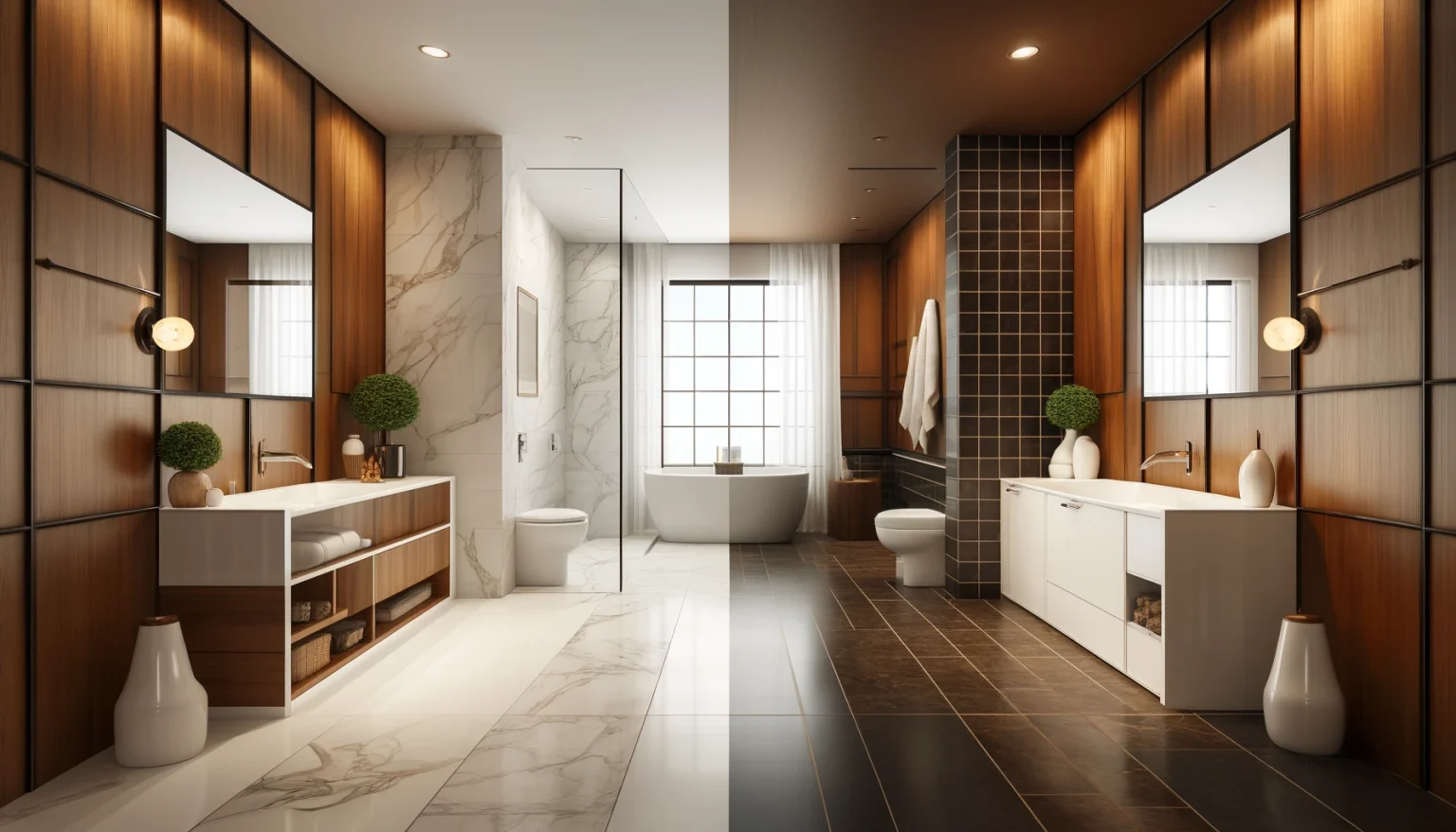
This image was generated based on a description provided to an AI model by ChatGPT.
Prompt: Generate a photorealistic image of a bathroom in two different styles, divided into a split-screen format. On the left, the bathroom features a white marble floor, enhancing its luxurious and clean look. On the right, the same bathroom is styled with chocolate brown tiles.
Save time and money
Designing can get expensive, especially when you’re making detailed drawings. AI helps cut down on these costs by creating digital images of design ideas. This not only saves money but also speeds things up, allowing clients to see many options faster and make decisions more easily.
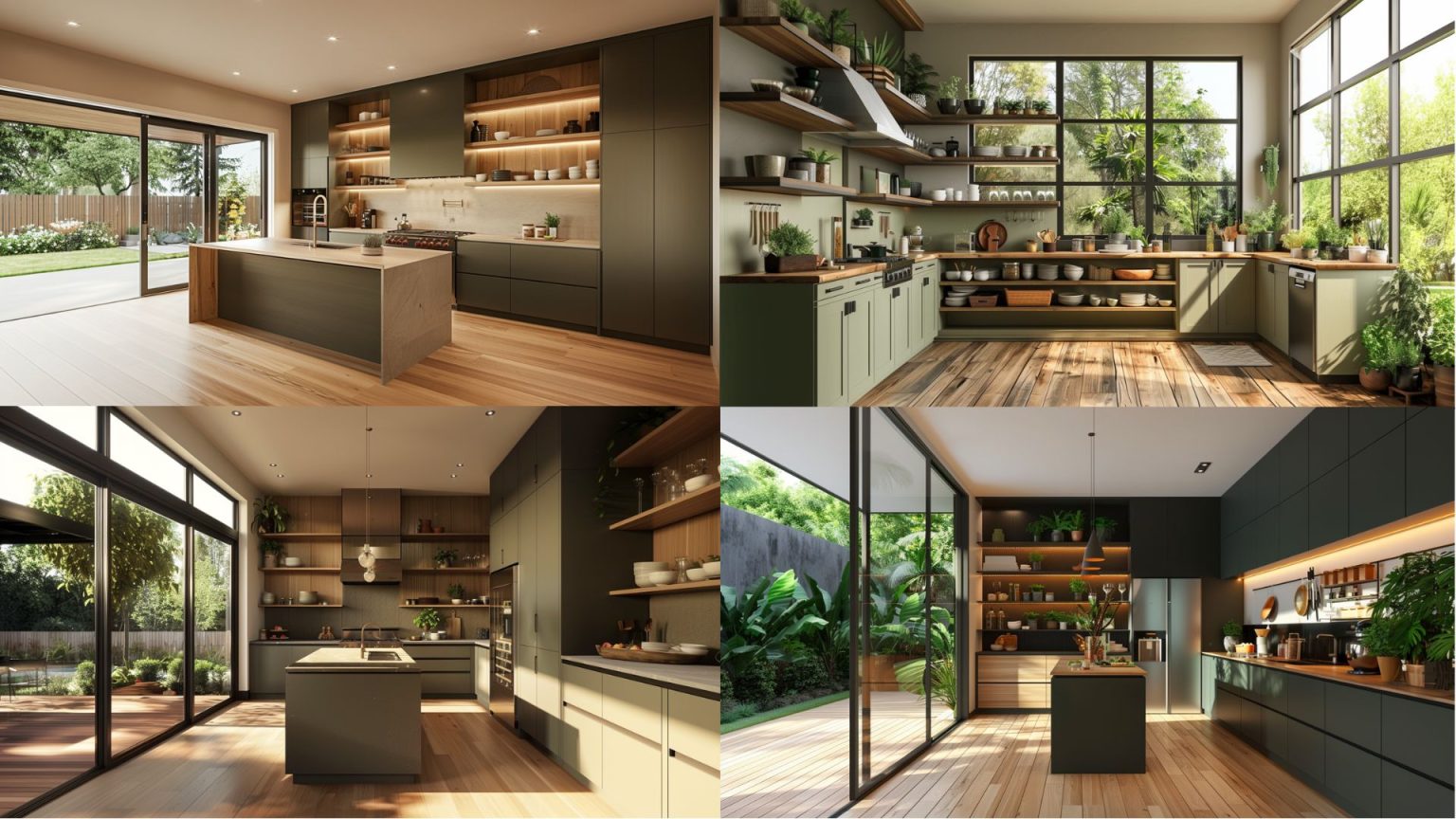
This image was generated based on a description provided to an AI model by Midjourney.
Prompt: A photorealistic image of an L-shaped kitchen with a central island. The kitchen is modern, with flat panels for the cabinets. The longest wall, directly in front of you, features open shelves that hold an assortment of cookware and plants, in lieu of upper cabinets. The shorter wall to your right boasts floor-to-ceiling cabinets painted in a sophisticated dark olive green, seamlessly integrating the refrigerator into its design. The flooring is a beautiful, warm-toned hardwood, complementing the light wood of the cabinets and adding to the kitchen’s cozy atmosphere. The overall lighting is soft yet ample. You can see the backyard through the window. ar 16:9, v– 6
Boost Your Creativity
Some people might worry that AI could take over the creative part of designing, but it actually does the opposite because it can suggest cool and unusual combinations that designers might not think of on their own. For example, if your client asks you to come up with some ideas for their kid’s bedroom, AI helps you boost your creativity by offering unique design options that could inspire a playful and dynamic space perfectly suited for a child.

This image was generated based on a description provided to an AI model by Midjourney.
Prompt: A fun kid’s bedroom
Personally, I think that AI is turning into a must-have tool for modern interior designers. It doesn’t just make things easier; it opens up a whole new world of possibilities for creativity and innovation. By using AI, designers can not only make more beautiful spaces but also give their clients a truly personalized design experience. While AI is still not perfect—sometimes presenting errors, some of which can even be amusing to see—it is improving daily and becoming an essential part of our toolkit.
If you’re inspired to explore the limitless possibilities that AI can bring to your next project, let’s connect!